Monday, April 19, 2010

Spring 2010

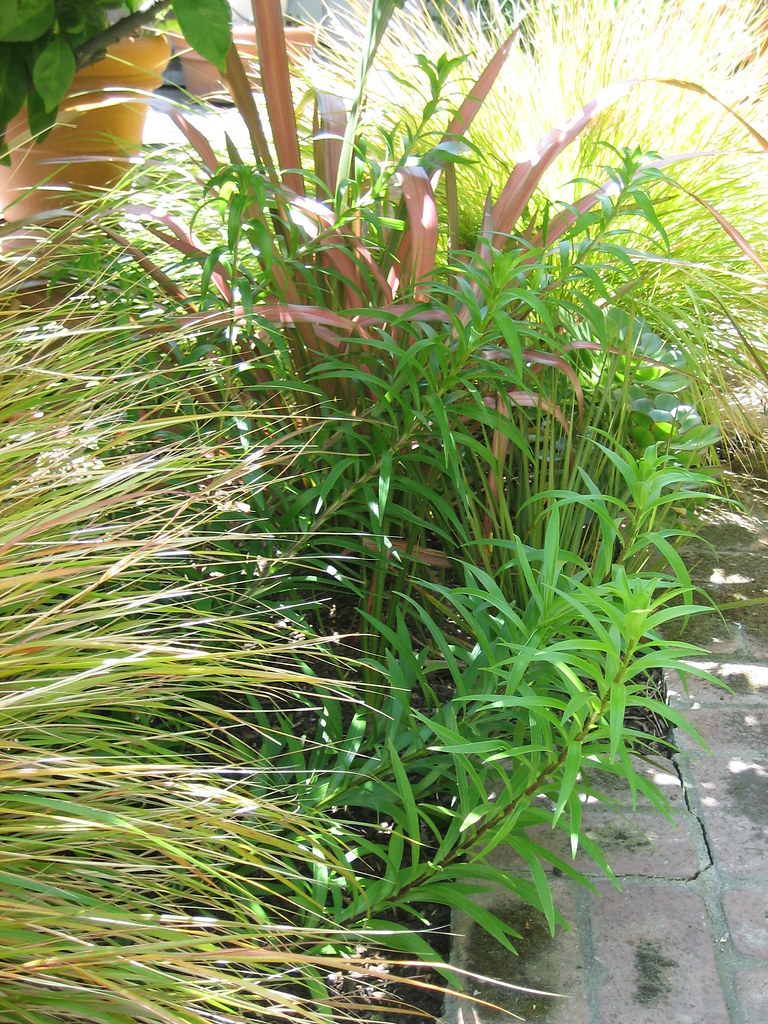
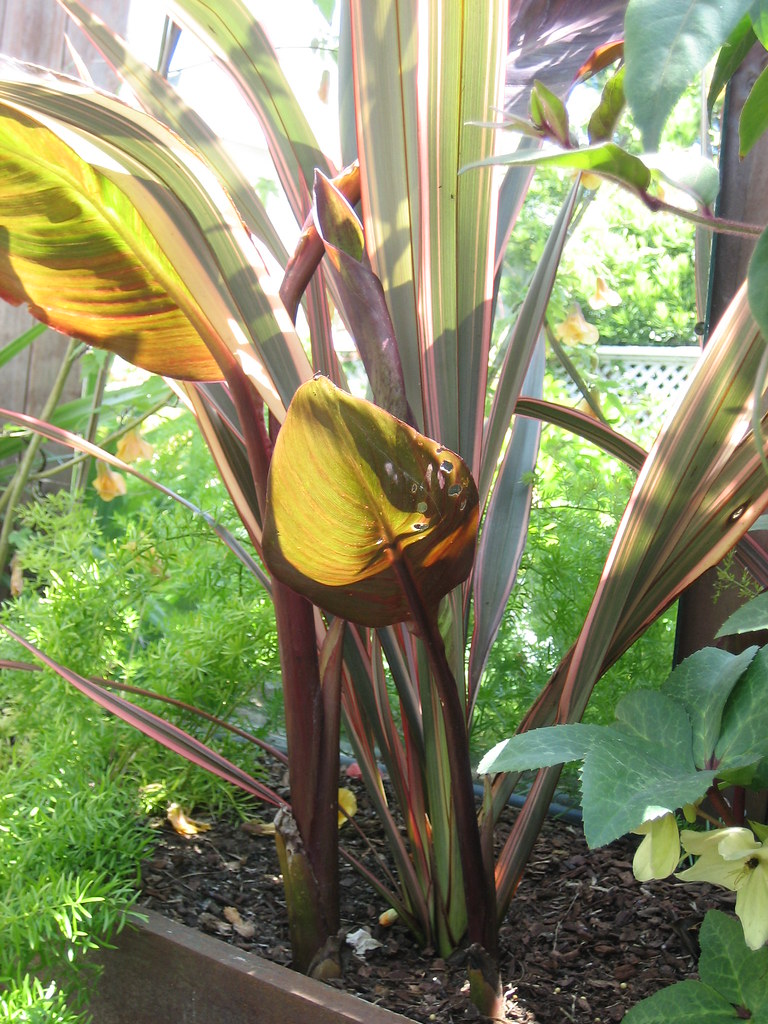
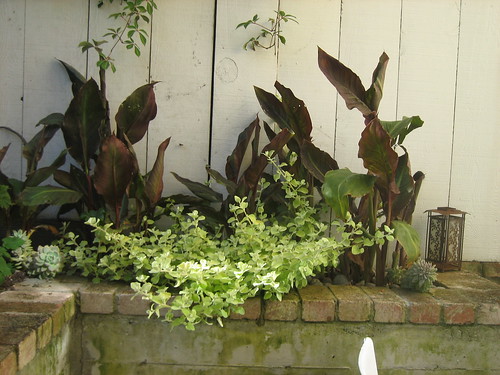
Beds newly planted last summer are really coming into their own. Here I transplanted several Cana Lily corms from the western and southern planters after thay languished and never bloomed. Here in the northern planter they are multiplying.
This past weekend we finally removed the Jasmin 'humilis' or Italian Jasmine after it could not be kept under control. The process dulled a chain saw blade and broke a spade. I replaced it with an orange clock vine (Thunbergia gregorii).
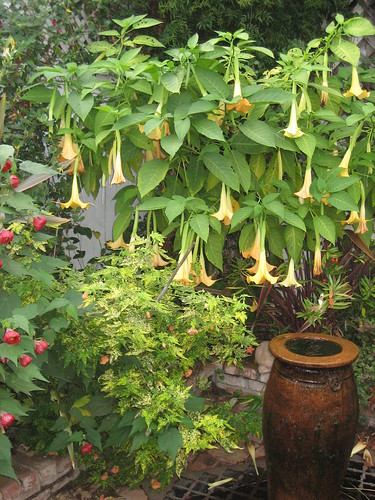
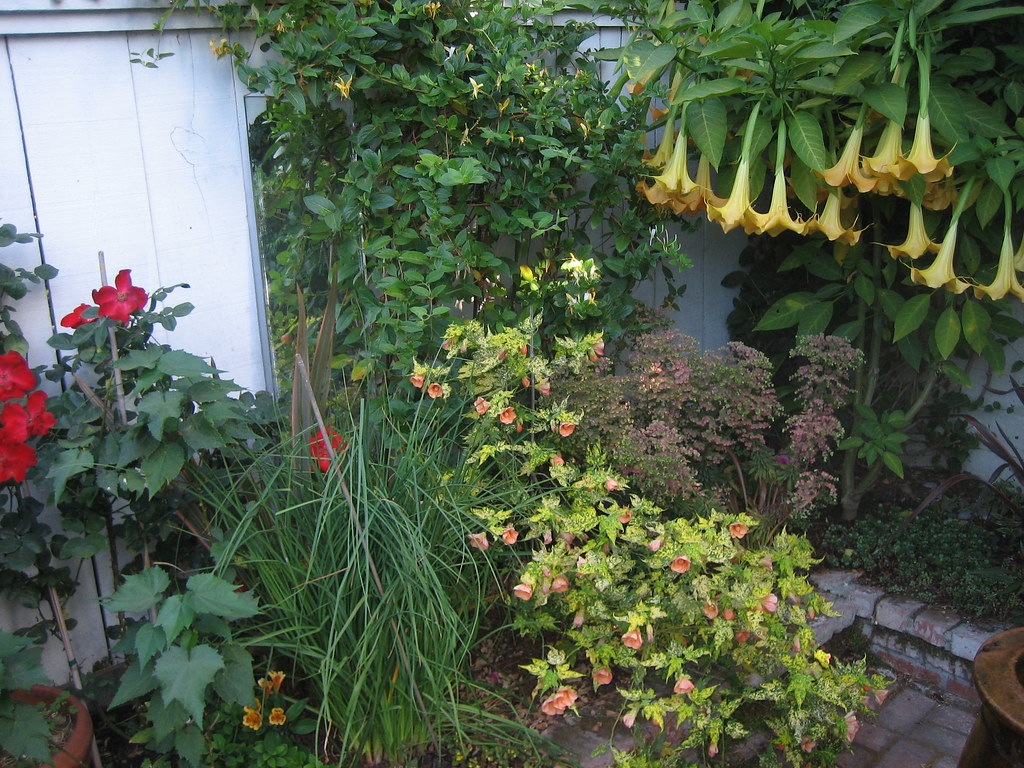
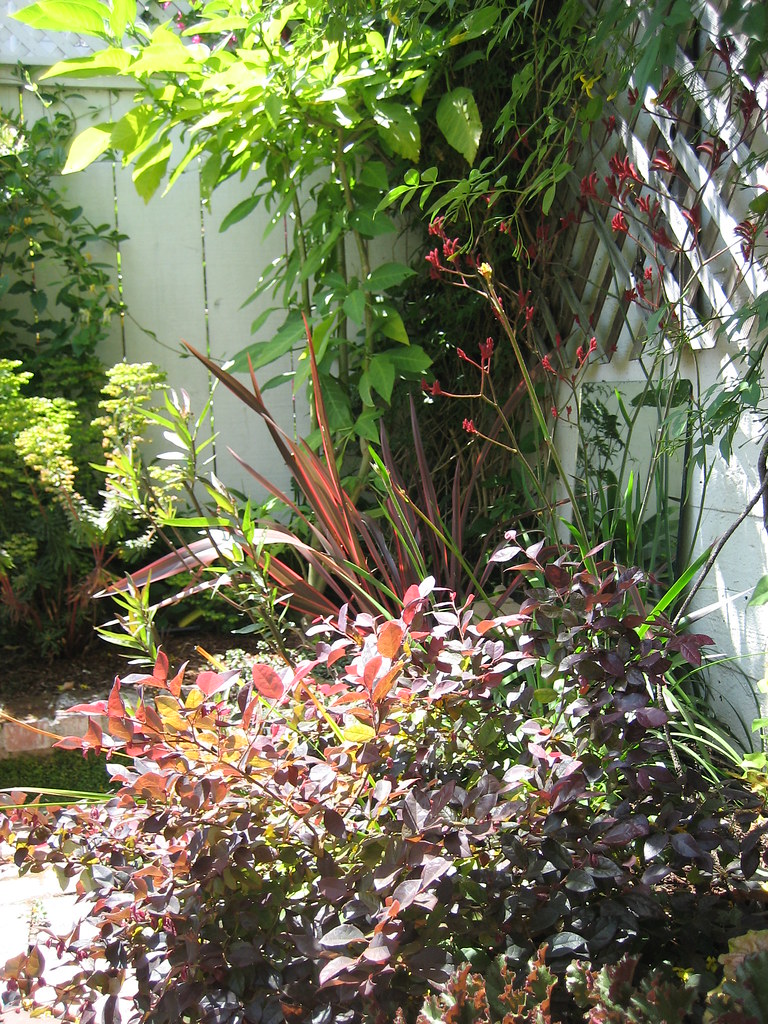
After pulling out grasses from the bed to the west of these cana's, I transplanted the red cestrum from the south planter and also the monkey's paw that wasn't getting enough sun. We'll see if these can take in a sunnier spot, or need to be dumped. All the Abutilon I've moved into the ground are flourishing now. But the most spectacular is the Brugmansia 'Charles Grimaldi' which just won't quit.


Saturday, June 13, 2009

Cold, Cold June


Our terribly cold spring has finally warmed up, but the results are long, slow blooms and miserable tomatoes, eggplant and cucumbers. The northern wall might someday recover, or be tranformed into a vertical garden.

The fortnight flowers have finally succumbed, and after three weeks of wrestling the corms out of the ground, they are no longer a part of the garden. In their place I have just transplanted six previously failed-to-bloom cana lily rhizomes as well as a wind-blown tomato from the upstairs deck. Sun may still be an issue, but hopefully we will see some blooms against the white-washed wall by the end of summer.

The white cherry tomato is blooming, but won't set fruit. Lissa and Hiro are having the same problem. They think it is the lack of bees.


Aeoneum are taking over both the front planter, and the rear garden--so easy to grow, it might be time to stop transplanting broken-off limbs...


Sunday, November 02, 2008

On Growing Children II

School budgets and the future of the world as we know it: How lack of funding for education is dooming the future of our society, and why it may be related to predjudices against what is percieved as women and women's work.

Clarendon Elementary School PTA raises $400,000 a year to benefit their K-8 programs. Alvarado ES PTA raises $140,000. Monroe ES PTA raises $50,000. Daniel Webster ES doesn't have a PTA, but it might get one this year, but by the time the PTA is formed and on its feet, will have little time left to raise any funds.

Friends of Potrero Hill Preschool parents raise $20,000 a year in a school auction.

How many hours of volunteer time does it take to raise this kind of money? This is not for 'extras' this money is for the basics. From the tours I have attended, I have learned that these schools spend their money on the following:
1. lowering class sizes in the upper grades, which are legally allowed a 30-1 ratio, but are reduced closer to the kindergarten ratio of 20-1.

2. Enrichment educators to teach children while giving classroom teachers one period a week for planning and meeting with other teachers.

3. Classroom supplies

4. Enrichment programs like dance, sports4kids (PE-like games), art, music.

5. Tutoring

6. Afterschool enrichment programs

7. Healthy snacks

How I see it is that we have come to a place in our society where we are expecting parents (but mostly women) to spend their "free time" asking for their community for money to pay for the basics elements of their children's education. Because the PTA's of this city have so easily acquiesced, and gone out and essentially BEGGED merchants, businesses, family and other parents to pony up hundreds of dollars to augment the measily amount California allots to each child (we are currently 38th lowest in the nation for $/child spent on education), the state has said, if they can raise the money, why should we get more?

What is wrong with this picture? First of all, it is mostly women doing the begging, organizing and PTA labor. Just as it is usually women who do the work of two people in an office, while they cannot figure out why they can't hire someone to assist them. Why would the government pony up more money, when the women are out their raising it from the community for them? The precedent has been set.

Is educating children women's work? I know two families personally who appeared to be equal partners in raising their children until the question of schools came up, and in both cases the men just shrugged and said 'what's the big deal'? or 'You decide, I can't bothered'. It is this attitude that led me to wonder if the underlying reason education is not funded is that it is essentially not valued, and as most educators are women (like a mother's or caregiver's role at home during the first 3 years, teacher's work too is not valued, nor renumerated based on the true impact of a successful education or the cost of a failed education).

The line often proffered from non-funders for education in California is that we spend 40% of our state budget on education, and that is too much. Then why are we 38th lowest spender and why are our schools failing? What is the single difference in our schools between now and before Prop 13 lead to the financial starvation and steady decline of our schools, where middle-class parents are pitted against socio-economically disadvantaged children because they are both fighting for the same very small amount of funding for BASIC educational programs. Why are our school building in a state of decrepitude that would make anyone wonder where a societiy's priorities lie. And children do notice. They don't need a room filled with fancy computers, but they do need rooms without rotting floors, and bathrooms that don't reek of urine from rotted-out floor boards.

Just as shocking as having the police tell you that they really can't do much when your car is stolen as they have much bigger issues to deal with, and you do live in the city...this attitude is just not acceptible anymore. We have become so psychologically deformed by accepting what is unacceptible as a society, a community, and as parents. It is time to rise up and say WE AREN'T going to BEG anymore. Our children are our future, and we need to start planning for the future.

The government has no problem bailing out our failing banks, our failing auto industry, and mortagaging the next 100 years for a war we started. It is time to bail out our future and spend the money needed to fix our schools and our educational system so we can have a future worth looking forward to. This is not asking too much. It is what our society has to have to move forward and survive.
Backup of Blog Topics


As usual, I am behind. Not on thoughts, but on recording them. I don't know how some people keep their blogs updated, but I'm going to try here to do a "topic dump" once again so perhaps I can address each in the coming weeks, once the election is over, and now that the rains have set in (hence the fresly washed garden shown here to the right...)
I. On Growing Children II
1. School budgets and the future of the world as we know it: How lack of funding for education is dooming the future of our society, and why it may be related to predjudices against what is percieved as women and women's work.
2. Why it is that closing the acheivement gap has nothing to do with our schools, but is current efforts to do so are sucking our schools dry of desperately needed resources.
II. Vertical gardening, is it feasible, is it plausible, and can you grow food this way?
III. How a shrinking world population could be the best thing that ever happened to a little town in Germany.
IV. Why blogging may be the next best thing to having your own personal cultural attache
V. Plastic, which are dangerous, and which are okay, so I can remember
VI: Oliver Sachs and the religion of nature and how the study and knowledge of science can give life context and meaning
VII. Does having a 5-year plan destroy any hope of being present in the here and now?

Saturday, July 19, 2008

Taste3 Copia 2008


Free association based on speakers and their topics at this three-day food, wine, art and more conference in the Napa Valley. Featured here with some art i like my munkasi.


Patricia Allen says double digging, I think John Jeavons; she says biodynamic, I think Rudolph Steiner, well he's dead, so maybe David Kinch of Manresa or John Petersen of Angelic Organics, also known as Farmer John, in "The Real Dirt on Farmer John"


Dickson Despomier and vertical farming, I say Patrick Blanc and vertical gardening.


TB continued...


Sunday, June 01, 2008

Late Spring still feels like Winter


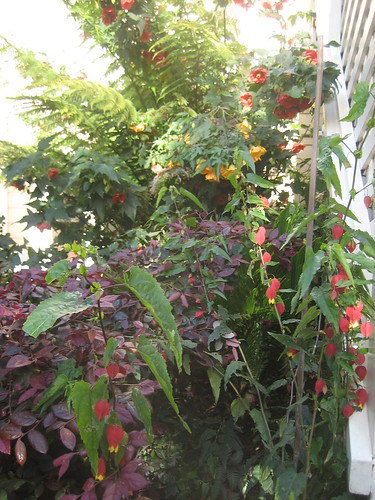
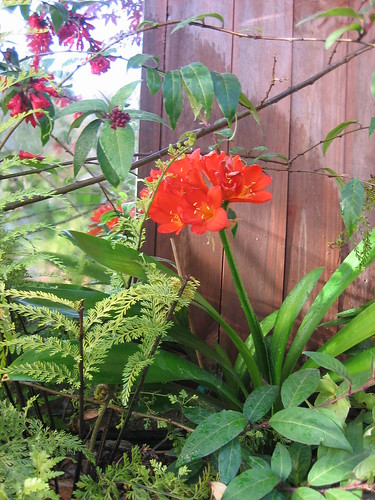
Despite the warming that has gripped the Northeast, it seems to remain unseasonably cold and windy here in the Bay area. Even though its June 1st, we still are just barely breaking 60 degrees, and the wind is something fierce. The garden seems a bit stunted as a result It's either the cold or soil depletion, despite my attempts at ammending the soil organically with blood meal and a compost top dressing. This Clivia Miniata notwithstanding, it lasted forever in the shady cold against the south wall.

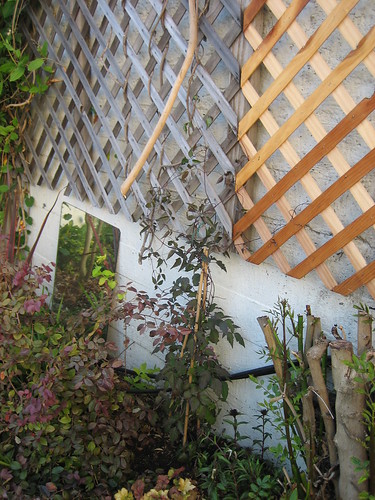
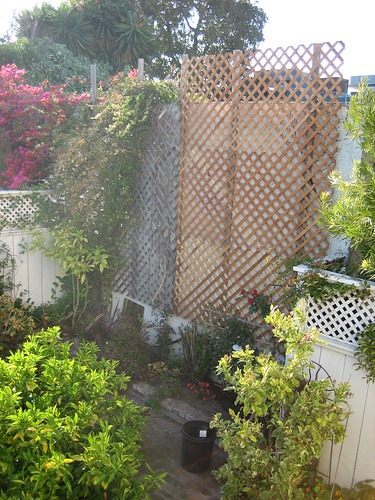
Further down are two images of the north wall. The Italian Jasmine (j. humilis) came down crashing through the redwood trellis, it's weighty branches snapping through finally after years of climbing with only minimum pruning.
We installed new trellis, and pruned the jasmine back, but are now wondering if the whole thing, roots and all, needs to go. A true garden quandry I have not yet resolved. On the one hand, the Jasmine grows like a weed, so it will fill the trellis quickly, but it shades all that is below and behind it, changing the climate of this bed completely. In fact the plants that were the understory here, helleborus, another Clivia and a Heuchera hybrid, I've moved to below the Antarctic fern on the East wall to protect from the sun (after first pulling out a giant red-flowered Abutilon 'nabob').
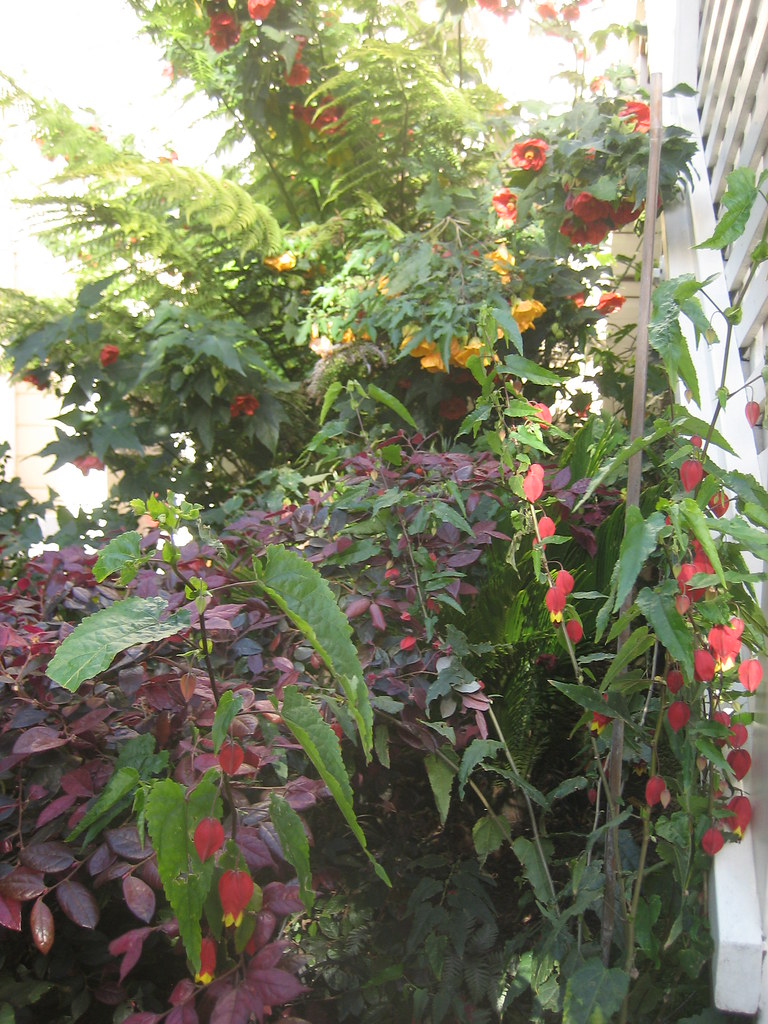
Here is the Clematis I've planted. I liked the dark red leaves and dark pink flowers. It seems to be thriving, though has a lot of die back that I think might be due to transplant shock. To the east of the Jasmine h. stump, I've crammed in a espaliered Meyer lemon. It looks pretty bad, and I have yet to sort out the composition.

I have also finally decided to remove the white jasmine in the west corner because despite the lovely fragrance when in bloom, most of the time the plant just looks like a bad hair day. Removing it will completely denude the entire trellissed North wall, at which point I may have a better idea about what to do--tabla rasa and all that.

Other troubles that plague me are the lack of citrus on my lemon and orange trees, both seen here with the orange on the left. Sometimes I think I should haul the blood orange out, but it is such a lovely tree, despite being soley decorative, that I don't have the guts yet to do it.
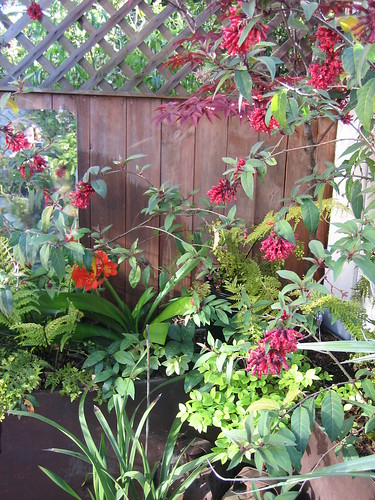
Despite all of my indecision and other various garden woes, I still get endless pleasure from the assortment of plants in the planter that seem to thrive despite the general neglect the receive. I think we got the dimensions just right and the depth has provided the roots of these plants, despite being very crowded and probably overplanted, with enough room to grow and thrive. I did pull out a Kangaroo paw that was hiding, not blooming, behind a euphorbia. Transplanted to under the cut jasmine, but it got fried in the 3-day heat wave we had in the middle of May.

Other new plants include two tomatoes in pots with cages, which is a first. All of these photos were taken on May 5th.


Saturday, November 17, 2007

Autumn Colors

I just have to note that despite the often too consitent look of my garden, there are changes afoot worth noting. Of course I don't get an autumn like those of my youth back East, but here are three notable plants with painted folliage worth viewing that mark the change of seasons to a degree.

Of course the endless string of 70 degree days makes you sometimes forget that it is mid-November, but the raking and deep afternoon shadows quickly remind us that the days are really very short and there isn't much sun reaching down into my magic garden this time of year.

Another note, the neighbors 'peppermint tree' a type of Eucalyptus, has grown another 3 feet over the past few months and now provides a nice screen between the gardens, and more privacy for both families. It's shocking how fast it's grown. It's also a treat to watch it dance in the wind. The branches sway back and forth in the breeze like arms.

I love it now. Let's hope it doesn't get too dense in the future and cast a hard shadow where now it is soft and dappled.

Wednesday, September 26, 2007

Autumn (headaches) in the garden


Well, at least there is some good news, this Ricinusor Castor Bean plant is just thriving. The Cana I inadvertantly co-planted next to it is also doing well, though did not flower this year.

On a more interesting but not so happy note, the entire North bed has literally become a hot bed of infestation. I've lost 3 Helleborus to a combination of aphids and sooty mildew fungus. Then I noticed that the Euphorbia myrsinites I'd transplanted from the front bed was languishing. When I pulled it out, completely fed up, I realized it was covered in scale. AHHHH.

This is the first scale I've had in the garden since I had a potted tangerine tree years ago. I've never seen it in the beds before. This is next to the massive aphids, sooty mold, and a struggling Altissimo rose that has some major die back. Then while pruning another Euphorbia in the north west corner, I was suddenly covered in ants. Not a good sign. Time for some boric acid and molasses, chili powder and layer of freshly harvested vermiculite from the worm farm.

Friday, July 20, 2007

Just What is a Natural Landscape?

Just finished reading Charles Mann's book 1491 and am still ruminating over the implications of the ideas expressed in the book. It is a long story of an alterante version of history than we were taught in school--certainly more balanced and believable. History of civilization in the Americas starting from first contact between the native 'Indians' and westerners and going backward to redraw what we assumed and were taught up until now. But more than that it is really a history of the planet, with man as just another creature who plays a part in nature, rather than as humans as somehow separate from the natural cycle of things (often above if you believe the bible). Mann debunks the idea that there can be a more 'pristine' version of nature if humans would just keep their hands off, garbage out of, saws away from, etc. This destruction as part of the natural cycle as global warming is, if in fact your respect the fact that we are part of nature, not separate from it. His final few paragraphs are worth quoting here as they seem to summarize his position better than I ever could:
Understanding that nature is not normative does not mean that anything
goes. The fears come from the mistaken identification of wildness with the
forest itself. Instead the landscape is an arena for the interaction of natural
and social forces, a kind of display, and one that like all displays is not
fully under the control of its authors.

Native americans ran the continent as they saw fit. Modern nations must do
the same. If they want to return as much of the landscape as possible to its
state of 1491, they will have to create the world's largest gardens.

Gardens are fashioned for many purposes with many different tools,
but all are collaborations with natural forces. Rarely do their makers claim to be restoring or rebuilding anything from the past; and they are never in full control of the results. Instead, using the best tools they have and the knowledge that they can gather, they work to create future
environments.


If there is a lesson it is that to think like the original inhabitants of
these lands we should not set our sights on rebuilding an environment from the
past but concentrate on shaping a world to live in for the future.

Sunday, July 01, 2007

In and Absurd world, the good news can be found in the garden


The avalanche is upon us. Suddenly global warming is being taken seriously. But I feel like I've known it was real all along. The country is finally upset about Iraq. I didn't think we should've gone to war in the first place. The oceans of the world are in peril, and aquaculture is quickly adding to the toll, but I'd been convinced of this more than ten years ago. I should feel vindicated and ahead of the curve, instead it sickens me that it's taken this long for it to sink in. I just read about a common psychological assumption that most people believe everyone knows what they know...well that's for damn sure in my case. I'm still in a state of shock about this. It's not that all the ideas about environmental degradation were mine--I happen to live in the world and notice things, and do a fair amount of mostly main-stream reading. Here's a choice little tidbit from TEN years ago by Paul Hawken, it's slightly dated, but still holds up easily against the drivel printed in the mainstream press on global warming and where we stand today. Put 2+2 together and you can't miss the conclusion.


Now comes the question of what to do about it. Having left my job in a classically wasteful mail-order retail house, I've taken the first step. Raising a child with an awareness of our environmental predicament helps too, but it's not enough. Bio diesel for the car would help, not driving a car at all would be even better. All nice, but really the world needs to change on an industrial and universal level if we are going to save ourselves. The garden gives lots of solace, and a few answers helping remind us that over time we can build a relationship with nature to benefit both. I find the number of creatures that visit my modest plot astounding, and the numbers seems to be growing--hummers, butterflies, ladybugs, jays, finches, as if I've maybe improved the environment in my own little way.


Having just read cradle to cradle, I feel like I've finally stumbled upon someone who is thinking in a way that is way beyond conservation, into a direction of universal symbiosis with nature--on an industrial level. This is finally what I've been waiting to hear, not that any of his ideas were ones that had occurred to me as viable, but he somehow has proven himself, so people are listening. It is so simple it's astounding, but it takes starting over our thinking about everything we currently assume and the way we do things. It's about time.

Saturday, June 23, 2007

Nasty Night Soil Soils my Garden


The image and text don't match, but that's is exactly what it's been like going into my garden lately and finding beautiful blooms, amid clouds a flies and a the stench of cat scat. Despite my ongoing attempts to trap and neuter the feral cat population in the neighborhood, they don't seem deterred in choosing my beds for their nightly toilette. That was bad enough. Then to add insult to injury, they've managed to break off several branches of my lovely corner Japanese maple, Acer palmatum 'bloodgood', on their climb out of the garden after doing their business. Oh what to do, what to do. Jared has offered an elecric fence. My sister has recommended nails or glass shards driven into the tops of the fence rails. I've tried stones, sticks, large (ugly but usefull) garden ornaments which all work but they the cats move onto another spot in the garden. The current favorite is under the orange tree. So many litter boxes, so little time.

Ironically there was an article in the chronicle today on poisoning of ferals. I could so easily sympathize. You just get to the point where you want them all to be euthanized. Despite enjoying seeing them out there frolicking, I just can't take the fighting, flies, scat and spray any more. After going to the trouble of catching 20 animals, having them fixed and releasing them, this is how they repay me. What is a gardener to do?

Monday, June 11, 2007

Curating Plant Collections


The plant palette is a curious thing to work with. The longer I garden the more I learn about what to consider when combining plants, beyond the obvious color-form-texture complements and contrasts they present when first put into the ground.

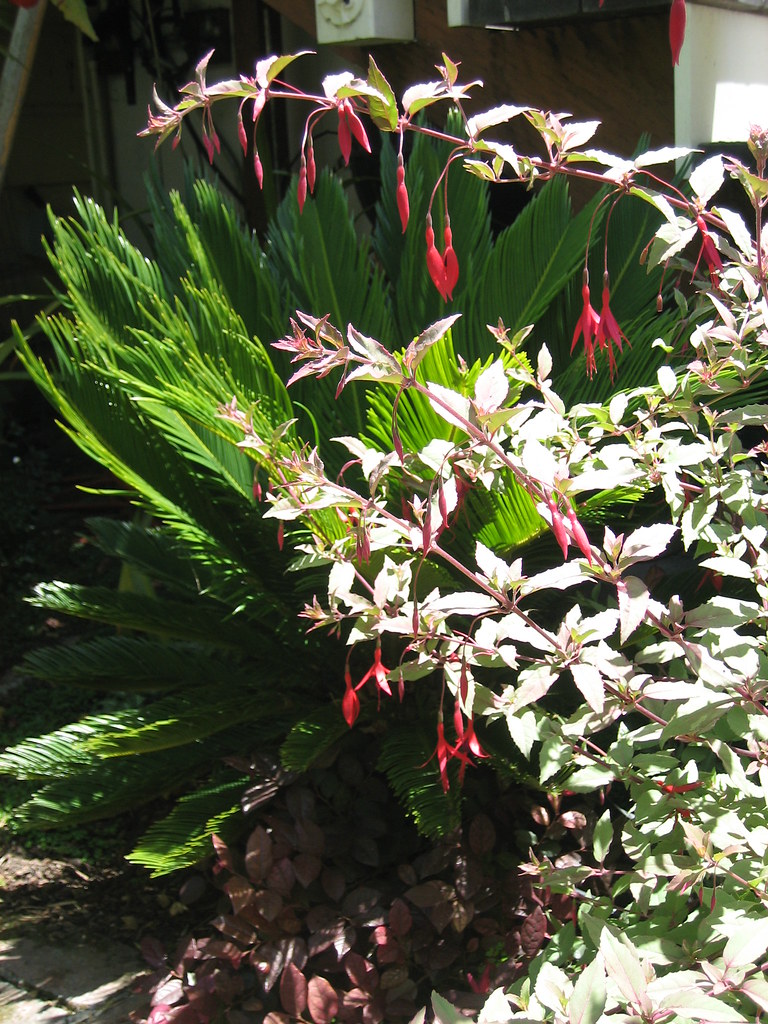
This Fuchsia, for instance, was a discounted, leggy, penny-pot when I set it into the ground next to this Sago Palm. The Loropetalum that is now shadowed underneath was small, but I expected it to takeover the bed. Instead the Fuchsia has been the dominant one, and I am pleasantly surprised. I do have to be vigilant in pruning it back as it mounds across the pathway, but it is much more vigorous that I had known. My sister has had this plant in a pot for years, and therefore my growth expectations were warped.

Additionally, whenever growing plants in the bay area, it seems I have to add a few feet in both height and width to the Sunset 'mature' height given.

The other two plants that have been completely obscured in this bed are the two beautiful Japanese painted ferns and the black Mondo grasses, which are very happy and spreading by runners. Some day I'll figure out how to give them all some space.

Urban Seed Gathering


Back in March I was sick of watching my Abutilon 'nabob' languish in this spot in the western planter. I decided I'd try a Ricinus 'dwarf red' a.k.a. Castor Bean Plant. The plant has poisonous seeds, which goes along with so much else in the garden. In fact at this point I'm thinking most plants are poisonous, and the ones that are not are the exception, maybe not the same ratios as mushrooms, but it does seem that nearly every plant I pick has poison stems, poison seeds, agitating sap, or all of the above.

So back to the Ricinus: Despite my efforts to secure a seedling from a local nursery, they all said that these would come in a few months. Interestingly, I did place an order for one at Sloat, and they have yet to call. I know our winter cold snap devastated many of the outlying nurseries, but still, sometimes I think someone should establish a nursery in SF to get ahead of the competition.
I really wanted this plant. I drive by a large one every day on my way up 20th street onto the hill. I decided one day during nap-time to walk up the street with a trowel and a scissor and see if I could secure a cutting, or even better a seedling. At first I concentrated on finding some ripened seed pods to harvest and germinated. Then, Lo and behold, I saw that the entire bed beneath the giant (10-ft tall) tree was sprouting with seedlings. I gently pried one out of the ground and carried it home after cutting a few pods for seeds and stuffing my pockets.

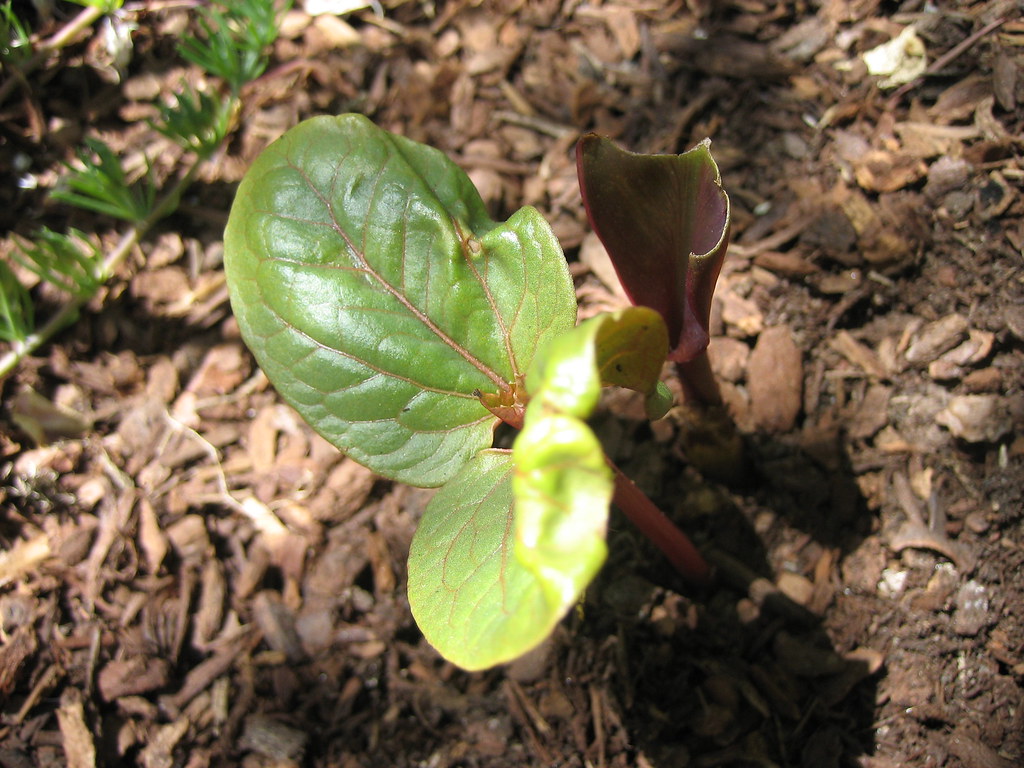
I gently transplanted my seedling, but it didn't take. I then planted a seed. Weeks and then months went by and I gave up and came up with a new plant for the space--a Cana lily. Again faced with having to wait until summer to get one, I gently dug up a corm from one I have and cut a chunk free to transplant. As you can see here, despite severing the top of the leaf, it is sprouting and has taken. Then, as I was watering by Cana, I see to have awakened what I thought was my failed Ricinus seed, and POP, out it came one day last week. So the two shall grow together side by side, until I have to move one or the other.

Thursday, May 31, 2007

On Growing Children

I've decided to indulge myself and take up some space on the blog with some musings on motherhood and nurturing a human being as opposed to or as is similar and different from a plant, as the case may be.

With the garden, I have an idea about the design, or maybe not, but can set something into the ground, prune another thing back to the wall, or yank a plant out alltogether, step back, or even step away for a few days or a week or longer and see what happens, how things are developing and at that point leave it be or change my mind again and modify.

Nurturing a child, as I have learned, and have been instructed on numerous occasions by the head teacher at my child's school, is not something to do by the seat of the pants, which rather sums up my approach to gardening. Instead it requires some serious thought about just what are your intentions.

In other words you should cogitate early on about what you do and don't want to pass along to your child, and then go about altering your behavior so that they won't pick up all those nasty habits. Or, it could have more to do with ensuring you impart the tidbits of wisdom that you've selected especially for your child, ones that will carry them through the years, echoing in their hearts and minds and helping them along as they travel their own journey.

One thing Henry Mitchell has to say in his book The Essential Earthman about gardening, which I have come to believe is as true about childrearing is that:
"Your garden will reveal your self. Do not be terrified of that. You have as
much right to live as--well, at least one may alwasy say, "nevertheless, here I
am." Gardening [and childrearing] is not some sort of game by which one proves
superiority over others, nor is it a marketplace for the display of elegant
things that others cannot afford. It is, on the contrary, a growing work of
creation, endless in its changing elements. It is not a monument or an
achievement, but a sort of traveleing, a kind of pilgrimage you might say, often
a bit grubby and sweaty though true pilgrims do not mind that. A garden is not a
picture, but a language, which is of course the major art of life. "

Friday, May 18, 2007

Bird's Eye View: March and Now


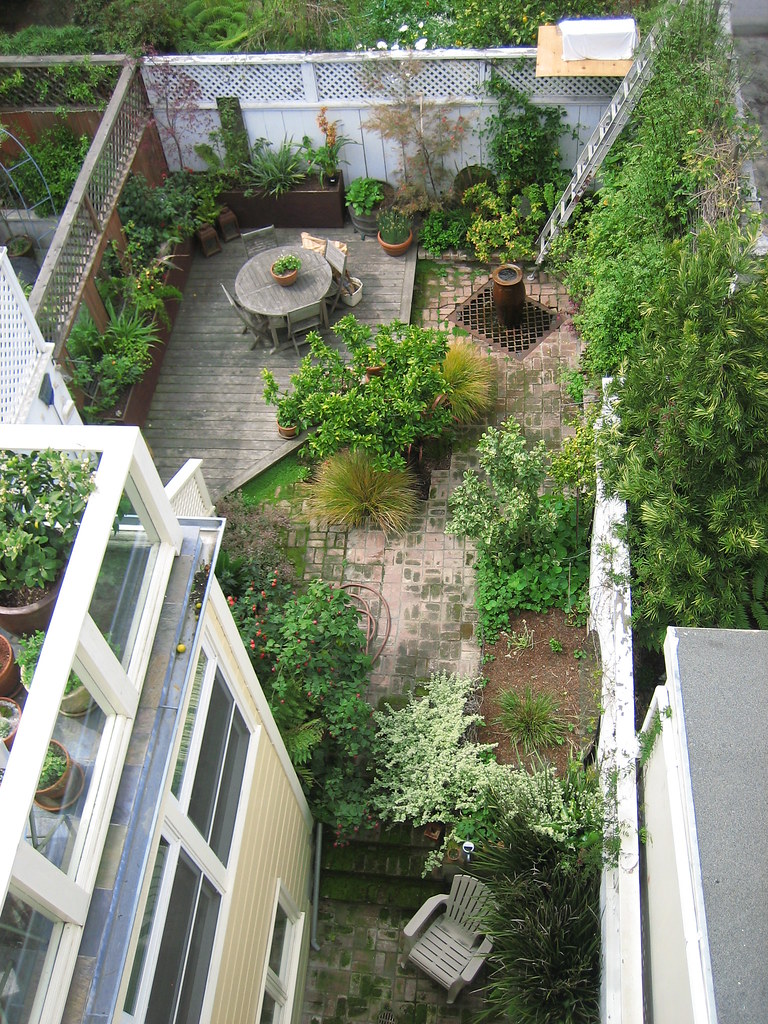
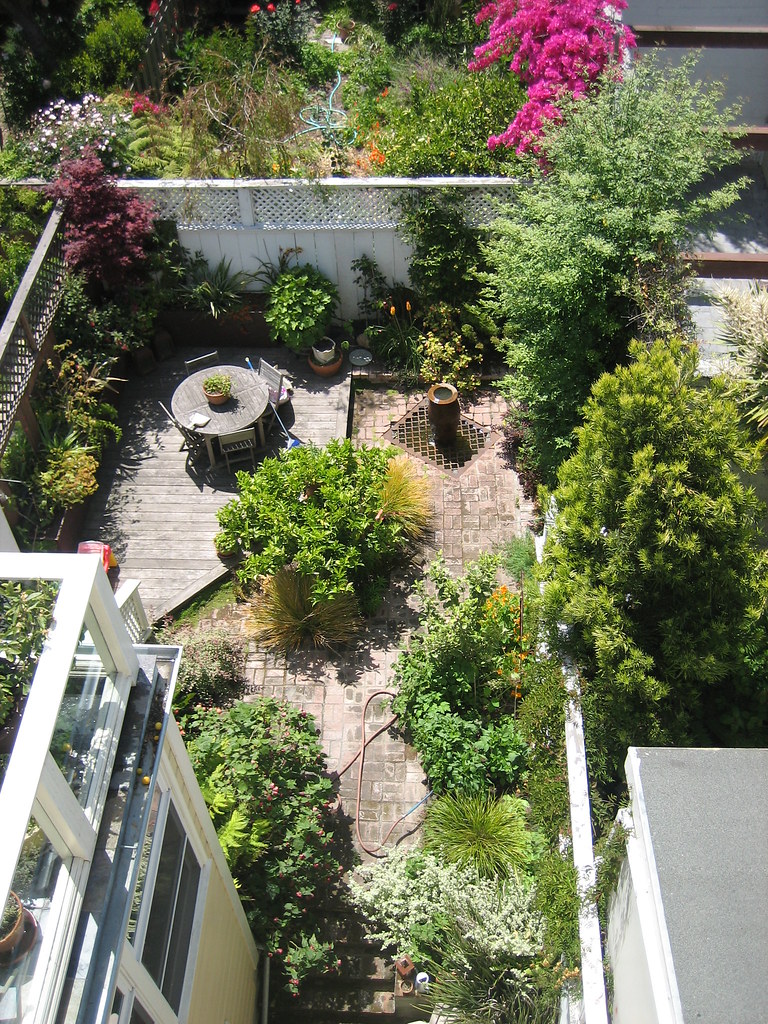
Most Clearly the Maple lights up the SW corner, but also the bed on the north wall is full of Dahlias and Nasturtium. It's as interesting to get a view from up on the roof as from down in the terrace outside the ground-floor apartment.

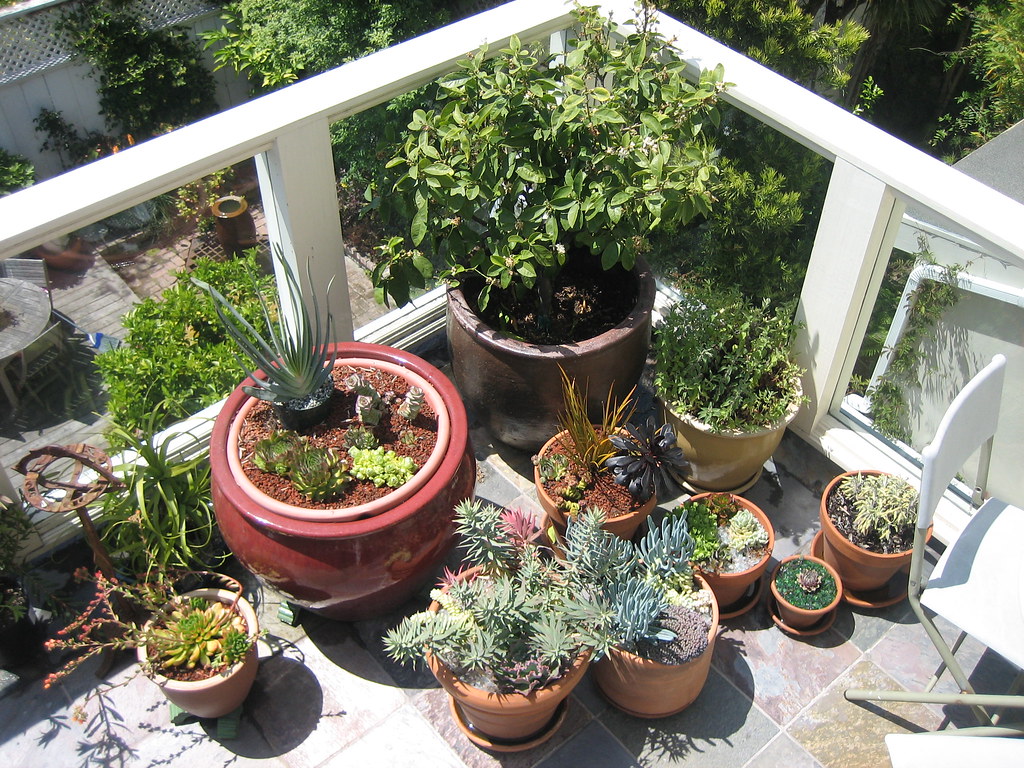
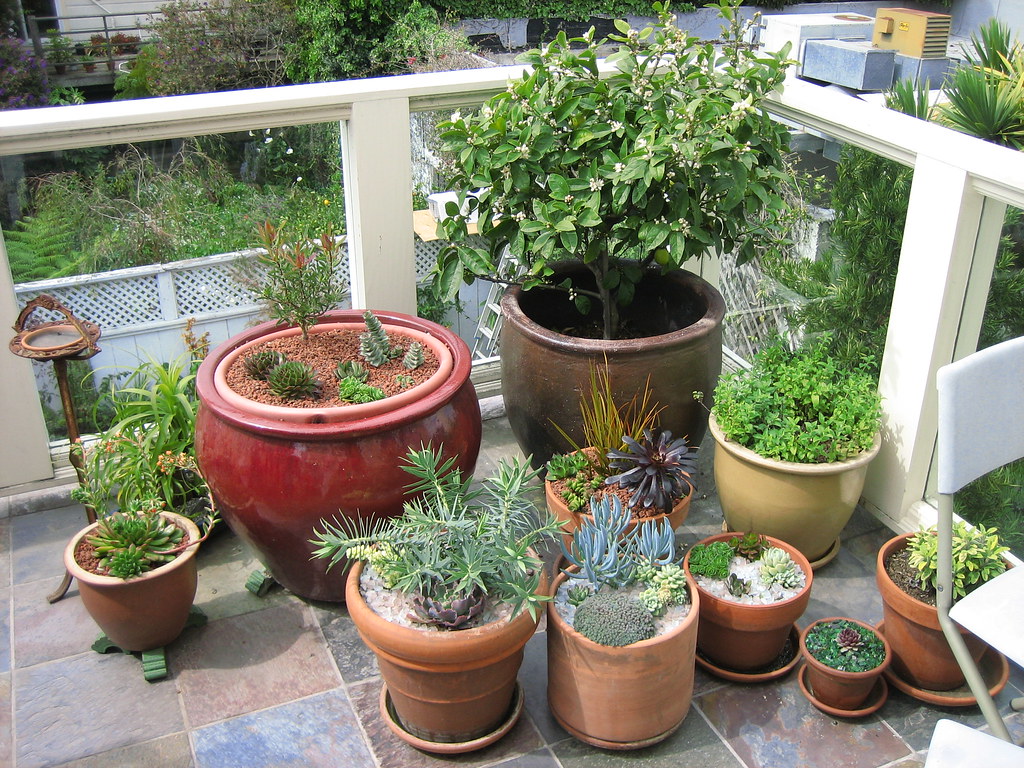
Succulents then and now


They grow slowly, but nonetheless, growth is evident. I killed off a beautiful leucadendron that I enjoyed all winter, especially with the western light illuminating the red leaves. It may have been the cold nights, but when I realized that both Leucadendron and Grevellia are both Proteacea family, I am wondering if there isn't some sort of blight or pest that is attacking these plants. They both suffered from dyeback right when they had new growth showing, and after months of thriving.
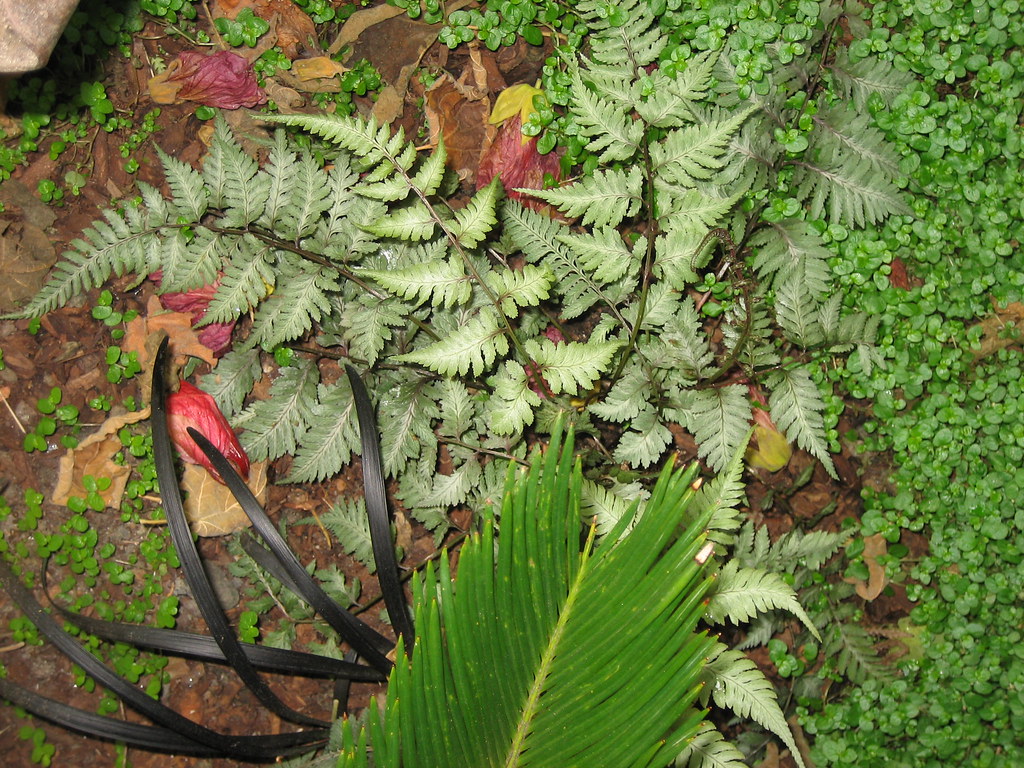
An Asplenium fern (Japanese Painted Fern) unfurling after a long winter's nap.
The Knifophia have finally bloomed along with a Columbine volunteer

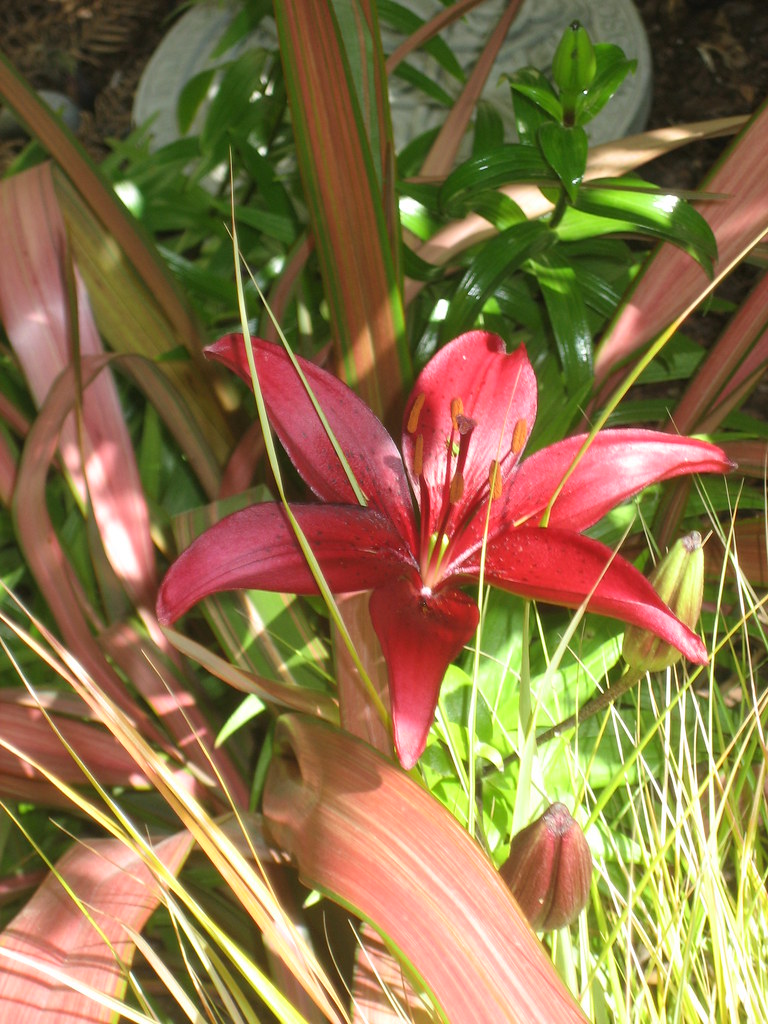
Lillies are pushing up, but really want more sun...


The Canna Lillies may be competing with the Phormium


Anigozanthos are blooming and the Charles Grimaldi is making another set of buds. What a satsifying plant. The phormium 'guardsman' finally happy after having its root ball lifted significantly out of the ground. Seems I've been planting everything too deep, and may have been the cause of the desmise of the Grevellia redhooks.

Thursday, May 17, 2007

Radical Removals, and other garden updates


I've been bad about keeping up, and know I will regret not having a more blow by blow of changes this season, as I am always amazed looking back to see how much the plants have grown and changed (or in some case suffered) over time. Here is a quick update and visual of what's happening today in the garden:

I finally succumbed and extracted the long-suffering Grevellia 'red hooks' from the western wall. I replaced it with the Abutilon 'nabob' that was languishing in the western planter next door, and a nice Altissimo rose behind it that will hopefully scale the back fence and flash it's lacquer-red blossoms through spring and summer.

On a whim I finally pulled out the Trachelospermum jasminoides (star jasmine) on the northern wall that seemed to do nothing but take up space and look diseased. Even the empty space looked so much better in that corner. I replaced it with another Altissmo rose, and found one, single sproutlet of Trumpet vine slowly, quietly making it's way up the trellis. I was so happy as I'd though I'd lost this plant for good, or didn't have any in my garden when I cleaned out the clipped vines from the neighbors pruned trumpet vine. I just left it there and hope it will coexist with the rose.

I've transplanted the poor, tiny mail-ordered Atissimo sprout to the Dahlia bed, and it seems to finally be flourishing, though it was way too small to have planted when it arrived in the mail.

The Canna Lily is pushing up leaves, and I just got some great advice from the new Flora Grubb garden center that opened down the street on how to divide it now so that I can move the shaded stalk to a sunnier spot.

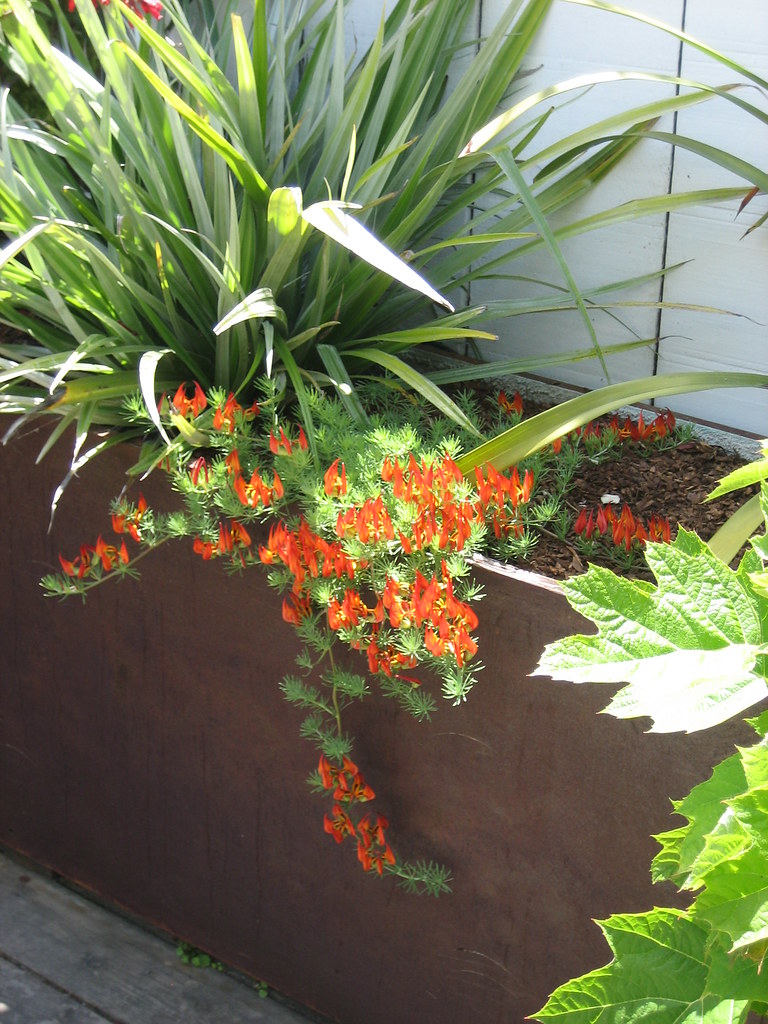
Other new additions include the Lotus bertholii that is spilling down the western planter from where I pulled out the Abutilon Nabob (seen here to the right), three new succulents I used to underplant the Leucadendron after pulling out the overgrown fern.

Deciduous plants and bulbs that have come up include the Japanese painted fern, Canna Lily and other Asian Lilies.

Flower stalks are pushing up from the Knifofia and Aniganothus.

I had an arborist come by to give the final call on the Grevellia, and he recommended nitrogen ammendments for my abutilon hybrids that I though were root-bound in the southern planter. I used the prescribed dose of blood meal on the package and will see if that does the trick. I fed the Abutilons (yellow hybrid and megapotamicum), the Red cestrum, and the Aniganothus.

Wednesday, March 21, 2007

Another Ode to Suzanne Porter on the Spring Equinox


I was just back in the garden checking out what has budded, as I noticed this little gem glowing in a sun-dappled corner. I had forgotten what it was called, but remembered distinctly why I had bought it, and upon who's recommendation I had made room for it in my tiny garden. It was, once again, Suzanne Porter, despite her being 'late'.

I had to look up the article in Horticulture Magazine, from which I had sourced this one, and am linking to it for future reference. I think I will go through it and write a list of plants from her garden too (see below). It's like a manual of perfect recommendations. It makes me want to double the size of my garden to fit more of these gems in. I do love my little space, and really it is just manageable for me, though, so for now I'll have to just cram a few more picks into these hidden nooks and crannies.

Here is the plant list:
Hypericum x inodorum 'Summer Gold' (seen here to the right)
Salvia officinalis 'Icterina'
Cotinus coggygria 'Purple Robe'
Canna 'Wyoming'
Heuchera 'Pewter Veil'
castor bean plant (Ricinus communis 'Dwarf Red Spire')
Miscanthus sinensis 'Nippon'
Haloragis erecta 'Wellington Bronze'
Rumex sanguineus var. sanguineus
Verbascum chaixii
Sambucus racemosa 'Plumosa Aurea'
Artemisia canescens
Festuca 'Elijah Blue'
Artemisia 'David's Choice'
Agastache 'Firebird'
Mimulus 'Big Tangerine Red'.
R. ‘Altissimo’
Hemerocallis ‘Water Witch’
Abutilon ‘Souvenir de Bonne’
Cestrum elegans ‘Smithii’
Sambucus nigra ‘Variegata’
variegated oregano (Origanum ‘White Anniversary’),
Hypericum xmoserianum ‘Tricolor’,
Cordyline australis
golden larch (Pseudolarix amabilis)
Acacia cognata
brick-colored Cytisus 'San Francisco'
Canna 'Durban'
Berberis thunbergii 'Crimson Pigmy'
blood grass (Imperata cylindrica 'Rubra')
blond, feathery Sesleria autumnalis
Hypericum androsaemum 'Albury Purple'
Corokia cotoneaster
Aspidistra elatior, and
Iris foetidissima
Styrax japonica

Sunday, March 18, 2007

Feral Cats in a Dogpatch Garden


I've just trapped/neutered/returned 3 more cats in the past week with the help of my husband. This makes a grand total of 16 cats in three years that we've trapped and brought to the SPCA for this amazingly free service.

Then I finally dropped a dime (which I was loathe to do, as I live and let live as a general rule) on the opposite neighbor to Animal Control as a cat-hoarder. Result: they found 15 feral cats living in her home, including 6 kittens. I like cats. I don't like digging into cat-shit, or cat the eau-de-piss left in my garden by an army of marking males.

The cats come with their fleas, and some with lice. Once fixed they are a peaceful and docile community to co-exist with, but I also can't stand watching them when they're not healthy. Interestingly, once I start trapping, they won't come into the garden to drink from the fountain. Even though I don't trap in my garden, but on the roof of the building next door. Cats just know. I use jack-mackerel and a tincture of Valerian, which is like kitty-crack, and acts like cat-nip once they sniff it. I pulled this picture off the SPCA site. They tip the ears of the feral cats that are fixed so you can see who in the community is in need of trapping and hopefully keep track of the size and general condition and stability of the population.